AI & Research
Intelligence for visual history
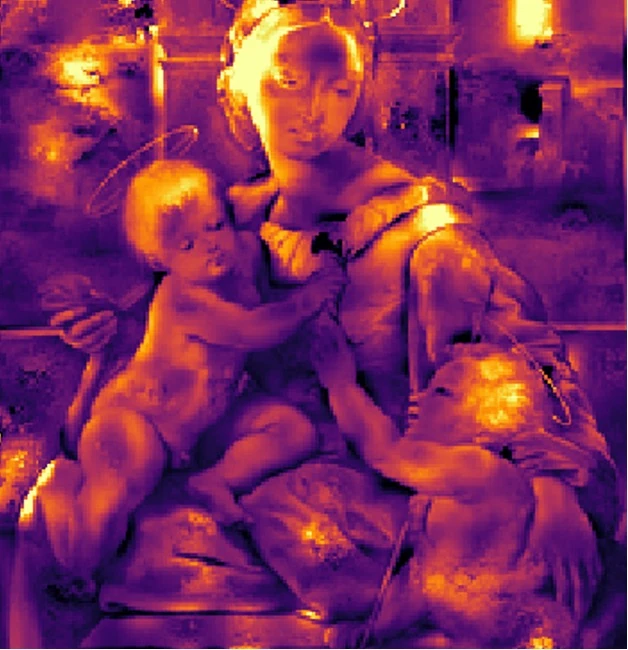
We use AI to connect visual evidence, collections data and archival knowledge—making humanistic inquiry more comprehensive and discovery more efficient.
Why agents
More evidence. Clearer provenance. Expert control.
An agent can search across tools and archives, compare competing evidence and assemble a documented path to a conclusion.
Our goal is not unexplained prediction. It is research infrastructure that helps specialists collect, test and interpret evidence. Sources remain visible. Uncertainty remains explicit. Qualified professionals remain responsible for evaluation.
Recent innovations
Research made to move the field forward.
01
Conservation AI Research Desk
An agentic research desk that searches a local conservation corpus and returns a cited synthesis with every source visible for professional review.
Conservation literature · Cited synthesis
02
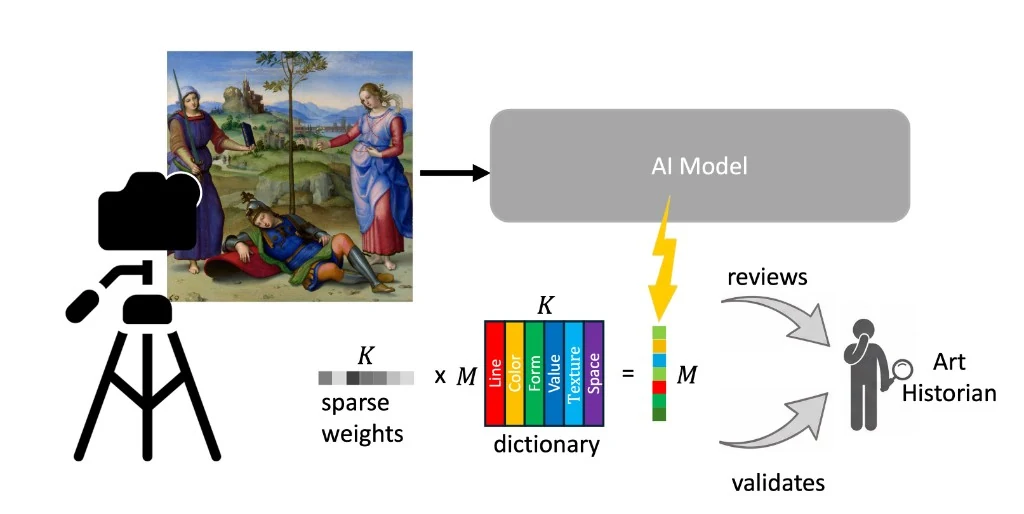
Stylistic Analysis through an Art-History Agent
A framework connecting vision-transformer features, curator-written texts and an autonomous coordinator to produce evidence-led stylistic descriptions.
Marc S. Walton · Astrid Harth · August 2026
03
AI Characterization of Particles and Fibers
A semantically anchored vision system for retrieval and characterization of particles and fibers from optical microscopy images.
Simiao Sun et al. · August 2026
A foundation for the next-generation archive.
Consolidate open cultural-heritage resources and institutional collections across fragmented systems.
Build research agents capable of using multiple specialist tools to test and refine art-historical questions.
Reveal patterns in artistic expression, material practice and cultural impact across time and place.
Work with us
Bring a question worth looking at closely.
We collaborate with collectors, museums, advisers and researchers on objects, collections and new research infrastructure.