About the lab
History, made visible
A lab for objects, images and ideas
The Visual History Lab was formed around a simple proposition: artificial intelligence can help us ask more of visual culture without replacing the expertise needed to understand it.
We investigate artworks through physical examination, imaging and analytical instrumentation. We develop artificial-intelligence platforms that connect visual evidence with archives and specialist knowledge. We maintain public research resources while providing in-depth work for clients.
Our position in Asia gives us a distinct perspective on a region underserved by comparable technical art-history and collection-research services.
What guides us
Rigor
Conclusions should be traceable to evidence, limitations should be visible and methods should withstand specialist review.
Discovery
Linking objects and computational methods opens paths that no single source or discipline can provide alone.
Care
Every object and collection receives close attention, material understanding, and discretion expected of a white-glove practice.
Personnel
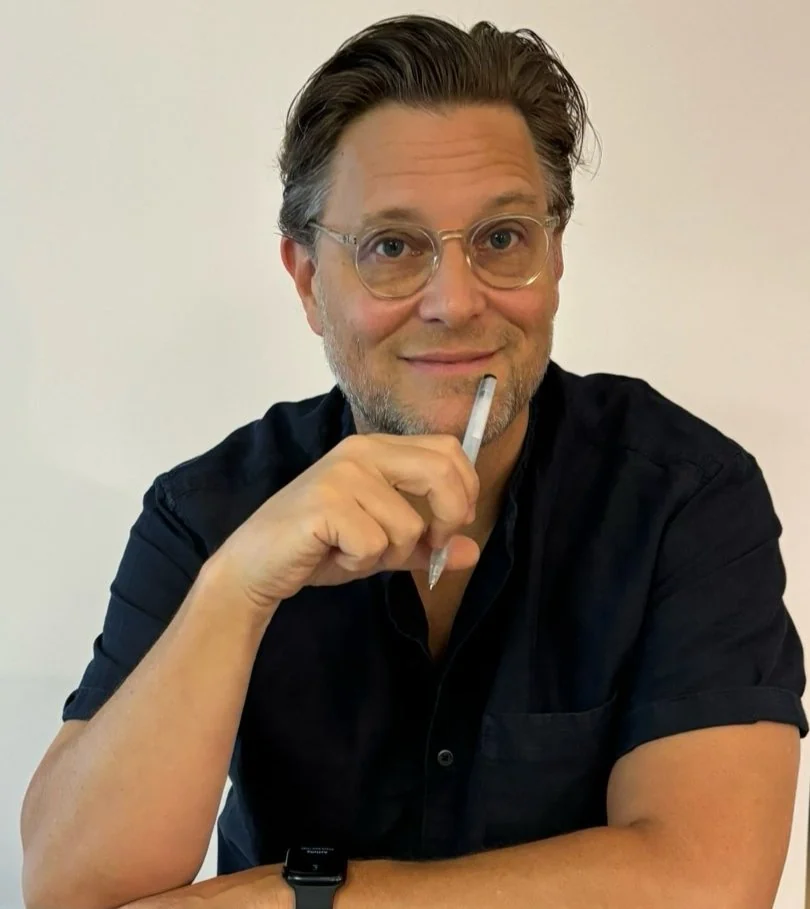
Marc Walton
Marc Walton is an internationally recognized conservation scientist and a professor in the Museum Studies Program at the University of Hong Kong. Renowned for his work at the intersection of technology and heritage, he currently focuses on using machine learning and AI to reshape how we analyze and understand visual culture. Marc’s extensive career includes leading conservation and research efforts at Hong Kong’s M+, the Getty Museum, and Northwestern University’s Center for Scientific Studies in the Arts, where he also held a professorship in the department of Materials Science and Engineering. He has published more than 130 peer-reviewed papers on computational imaging and the manufacturing history of ancient and contemporary objects. He holds a D.Phil. from the University of Oxford.
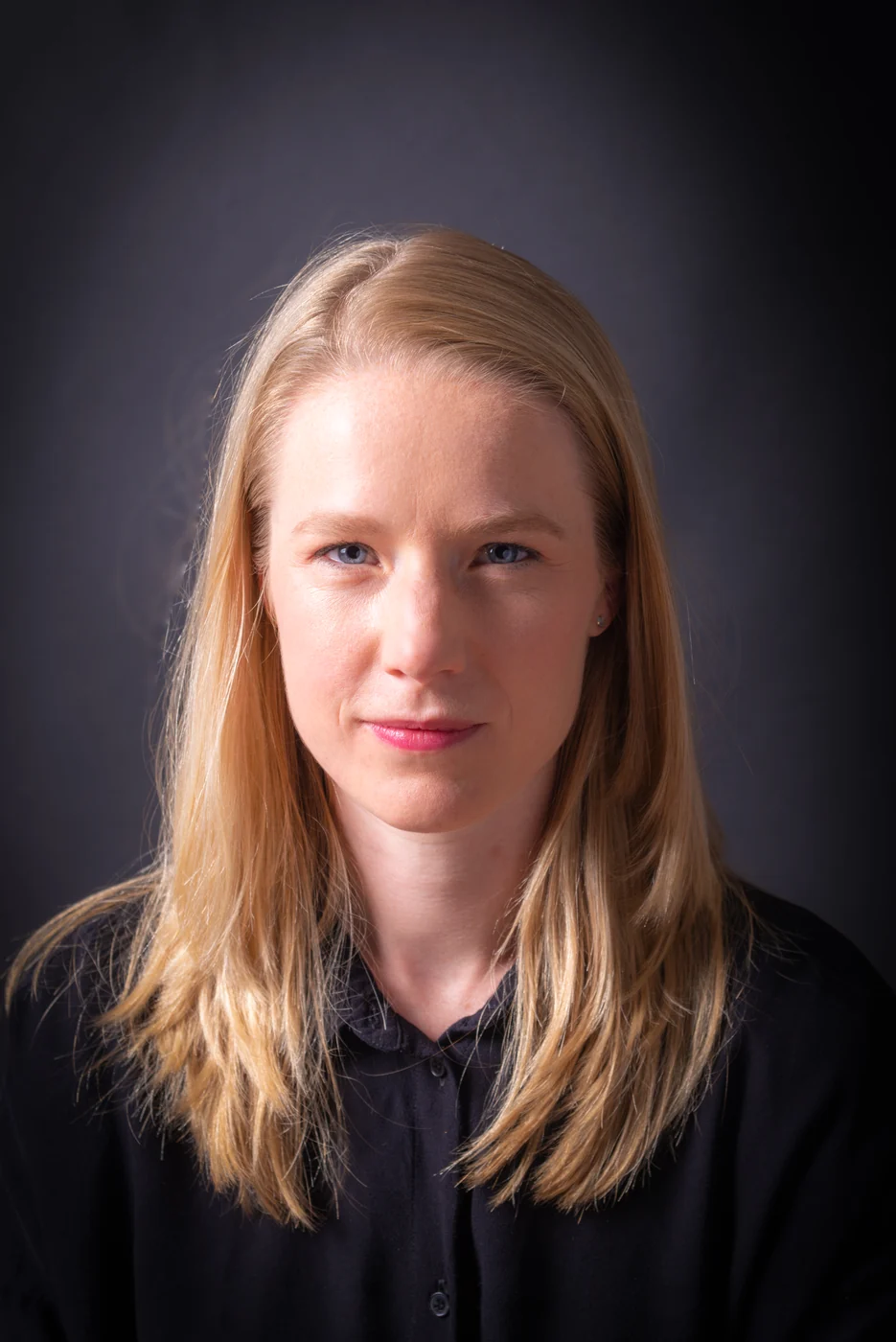
Astrid Harth
Astrid Harth (BA, MA, PhD) is an Assistant Professor of Technical Art History and Heritage Science at the Department of Chinese and History of the City University of Hong Kong. Previously Astrid was a postdoctoral researcher at Ghent University (Belgium), a visiting scholar at Columbia University (USA), a Chester Dale Fellow at the Metropolitan Museum of Art (USA), and a PhD Candidate at Ghent University (Belgium). Both her PhD and her postdoctoral research were funded by competitive grants from the Research Foundation Flanders. As both an art historian and conservation scientist, Astrid Harth specializes in technical art history and heritage science in particular in relation to painting and related 2D objects thus bridging art, humanities and science.
Astrid Harth has published in several top-ranked peer-reviewed scientific journals, including Heritage Science and X-Ray Spectrometry. Moreover, her work has been published in award-winning exhibition catalogues such as Van Eyck: An Optical Revolution (Hannibal) and Dürer’s Journeys: Travels of a Renaissance Artist (Yale University Press). She has an extensive network among museums and art galleries across the globe including at the Metropolitan Museum of Art (NYC), the National Gallery (London), the Museum of Fine Arts (Ghent) and The Indra and Harry Banga Gallery (Hong Kong).
In the coming years, Astrid plans to further develop scientific research on works of art aimed at integrating art, humanities, and science using a wide range of scientific techniques and research methods. In 2024, she was awarded an ECS grant to study intentional alterations of early Netherlandish paintings. Recently, she also started to study the Qianlong bannerman portraits by means of imaging and analytical techniques. The aim of this research is to gain more profound insights into the materials and production processes of the portraits and to address art-historical questions.
Lynn Lee
Dr. Lynn Lee is the Senior Research Scientist at the University Museum and Art Gallery. Previously, she was the inaugural Senior Conservation Scientist at Hong Kong’s M+ Museum from 2022–2025 and was at the Getty Conservation Institute from 2011–2021. She received her Ph.D. from the University of California, Berkeley, in Physical Chemistry. Following a brief stint in the semiconductor industry as a process engineer in Silicon Valley, she was the Andrew W. Mellon Postdoctoral Fellow in Conservation Science at the Straus Center for Conservation and Technical Studies, Harvard University, from 2007–2010. Her interests include investigating material deterioration, developing in-situ, minimally invasive analytical methodologies to further understand artist practice and techniques, and engaging in research into practice for the conservation and conservation science sectors. She is currently on the Directory Board of the International Council of Museums – Committee for Conservation (ICOM-CC) and a co-author of Handheld XRF in Cultural Heritage: A Practical Workbook for Conservators, published in 2020.
Joost C.A. Schokkenbroek
Joost is a member of HKU’s Faculty of Arts as Professor of Museum Studies. After finishing his history studies at Leiden University, Schokkenbroek set off on a long international journey spanning several decades, serving both the museum sector and academia. Between 1988 and 2023 he held various curatorial and management positions in four different museums covering three continents—most recently as Museum Director of the Hong Kong Maritime Museum. Schokkenbroek was Professor at the Vrije Universiteit Amsterdam—with his inaugural address emphasizing the importance of material culture as sources of information—and Adjunct Professor at Simon Fraser University, Vancouver. He has lectured on history, heritage and museology at universities and museums in, among others, the Netherlands, Germany, the UK, Russia, Canada, the USA, Japan and China. Schokkenbroek has promoted his various fields of interest widely via radio and television, has co-authored five books, has been chief editor of many monographs, and published dozens of peer-reviewed articles—often related to maritime history, museum matters, and the importance of artifacts.
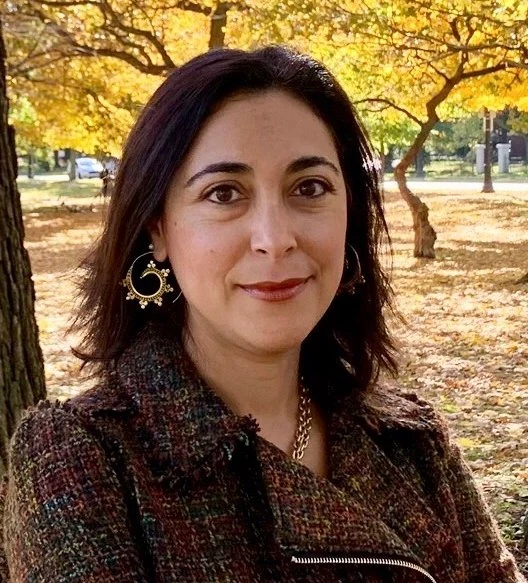
Sherine Badawi Walton
After training as an art historian with a focus on Egyptian art and archaeology at NYU’s Institute of Fine Arts and spending 6 years at the Metropolitan Museum of Arts, Sherine made a major career switch and for the past two decades has dedicated herself to higher education missions. Beginning at the University of Oxford in the UK where she was responsible for the University’s relations with UK Trusts and Foundations, she has spent the rest of her career managing research centers (at the USC Annenberg School for Communications and Journalism) and academic development trajectories (at the University of Chicago and the University of Hong Kong).
Our approach
Human judgment stays at the center.
Technology expands the evidence we can gather. Expertise determines what that evidence means.
01 / Observe
Look closely
Begin with the artwork: its condition, surface, structure, imagery and historical context.
02 / Analyze
Test the evidence
Use imaging, instrumentation, archives and computational methods to create multiple lines of evidence.
03 / Interpret
Build understanding
Bring scientific results and humanistic questions together in a clear, reviewable conclusion.
Work with us
Bring a question worth looking at closely.
We collaborate with collectors, museums, advisers and researchers on objects, collections and new research infrastructure.